
Unlock Your ICAO English Potential with Real Test Examples
Updated 4 min readBy Andrew

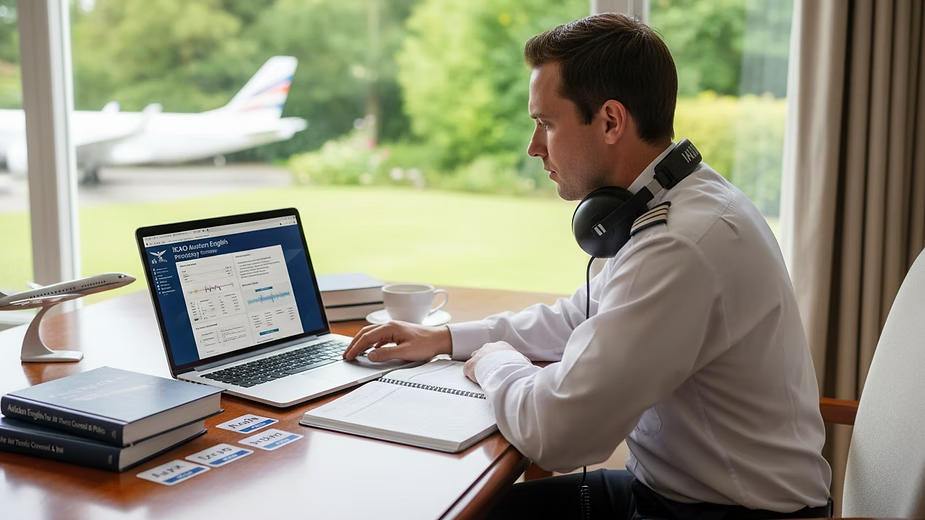
Mastering ICAO English is a must for pilots and airline professionals. It’s not just about passing a test; it’s about communicating clearly and confidently in the skies. I’ve been there, and I know how daunting it can feel. But here’s the good news: real ICAO English examples can make all the difference. They help you understand what to expect and how to respond effectively.
Let’s dive into how you can unlock your potential with practical, real-world test examples. I’ll share tips, sample dialogues, and strategies that work. Ready? Let’s get started.
Why Real ICAO English Examples Matter
You might wonder why practising with real examples is so important. The ICAO English test isn’t just about grammar or vocabulary. It’s about using English in aviation contexts—fast, clear, and precise. Real examples show you exactly how communication happens in the cockpit and with air traffic control.
When you study real ICAO English examples, you:
Get familiar with typical phrases and responses
Understand the flow of aviation communication
Build confidence in handling unexpected situations
Improve your listening and speaking skills simultaneously
For instance, a typical exchange might involve a pilot requesting a change in altitude or reporting a technical issue. Knowing the exact wording and tone helps you respond without hesitation.
Real ICAO English Examples to Boost Your Skills
Let’s look at some real ICAO English examples that you can practice right now. These examples cover common scenarios you’ll face during your test and in real flights.
Example 1: Requesting Altitude Change
Pilot: "Request climb to flight level 350 due to turbulence."
ATC: "Climb to flight level 350 approved. Report reaching."
Pilot: "Climbing to flight level 350, will report reaching."
This exchange is short but packed with essential phrases. Notice the use of “request,” “approved,” and “report.” These words are standard and expected.
Example 2: Reporting a Technical Issue
Pilot: "Mayday, mayday, mayday. Engine failure on the left side. Request immediate return to base."
ATC: "Roger, turn left heading 270, descend to 3000 feet. Emergency services alerted."
Pilot: "Turning left heading 270, descending to 3000 feet."
Here, clarity and calmness are key. The pilot uses “mayday” to signal an emergency and clearly states the problem and request.
Example 3: Weather Update Request
Pilot: "Request latest weather information for destination airport."
ATC: "Current weather at destination is wind 180 degrees at 10 knots, visibility 10 kilometres, scattered clouds at 2000 feet."
Pilot: "Copy weather information, thank you."
This example shows how to ask for and acknowledge weather updates, a common and important part of flight communication.
Practising these examples aloud will help you internalise the language and improve your fluency.
How to Use an ICAO English Test Sample Effectively
Using an icao english test sample is a smart way to prepare. But it’s not just about reading or listening. You need to engage actively.
Here’s how to make the most of your practice:
Listen and Repeat
Play recordings or read examples aloud. Mimic the tone, speed, and pronunciation. This builds muscle memory for speaking.
Record Yourself
Use your phone or computer to record your responses. Listen back and compare with the original. Notice areas for improvement.
Simulate Real Conditions
Practice in a quiet room, but also try speaking in noisy environments. This simulates real cockpit conditions where distractions happen.
Focus on Clarity and Brevity
ICAO communication is clear and concise. Avoid unnecessary words. Stick to standard phraseology.
Get Feedback
If possible, practice with a colleague or instructor who can give you constructive feedback.
By following these steps, you’ll turn practice into real progress.

Common Mistakes to Avoid in ICAO English Tests
Even with practice, some mistakes can trip you up. Here are the most common pitfalls and how to avoid them:
Overcomplicating Language
Keep it simple. Use standard phrases. Don’t try to impress with fancy words.
Speaking Too Fast or Too Slow
Aim for a natural pace. Too fast can cause misunderstandings; too slow can waste time.
Ignoring Pronunciation
Clear pronunciation is crucial. Mispronounced words can confuse ATC or examiners.
Not Using Standard Phraseology
Stick to ICAO-approved phrases. Avoid slang or informal language.
Failing to Listen Carefully
Communication is two-way. Listen carefully to instructions before responding.
By being aware of these, you can focus your practice on what really matters.
Your Next Step to ICAO English Success
You’ve seen how real ICAO English examples can transform your preparation. Now, it’s time to take action. Start practising with real test materials and simulate the test environment. Use the icao english test sample to get a feel for the questions and format.
Remember, mastering ICAO English is a journey. Every practice session brings you closer to fluency and confidence. With the right tools and mindset, you’ll pass your test and communicate like a pro in no time.
Additional Resources for ICAO English Mastery
Online Courses
Consider enrolling in online courses focused on ICAO English. These courses often provide structured learning and valuable feedback from instructors.
Practice Groups
Join practice groups or forums where you can interact with others preparing for the ICAO English test. Sharing experiences and tips can enhance your learning.
Simulation Tools
Use simulation tools that mimic real-life aviation scenarios. These tools can help you practice under pressure and improve your response times.
Books and Guides
Invest in books and guides that focus on aviation English. They often contain exercises and examples that can further enhance your skills.
Ready to boost your aviation career? Start practising today and unlock your full ICAO English potential! ✈️✅
Continue reading
Related articles

Expert Guidance for Passing the ICAO English Exam - icao exam guidance resources
Passing the ICAO English exam is a crucial step for pilots and airline professionals. It’s not just about language skills; it’s about safety, clarity, and confidence in the skies. I’ve been through this process and helped many others succeed. Let me share practical tips and expert advice to make your journey smoother and faster.
Master ICAO English Online Prep: Your Ultimate Guide to Success
Preparing for the ICAO English exam can feel overwhelming. But it doesn’t have to be. With the right approach, you can master the skills needed to pass confidently and boost your aviation career. I’m here to walk you through the best ways to prepare ICAO English online - efficiently, effectively, and at your own pace.

Why Choose Level6Aviation for ICAO Prep? - level6aviation training
If you're aiming to pass your ICAO Aviation English test with flying colours, you want a prep course that’s efficient, clear, and tailored to your needs . That’s exactly what Level6Aviation offers. I’ve seen many pilots struggle with the ICAO English requirements, but with the right guidance, it becomes a straightforward step in your career. Let me walk you through why Level6Aviation is the best choice for your ICAO