

Mastering ICAO English is a must for pilots and airline professionals. It’s not just about passing a test. It’s about communicating clearly and confidently in the skies. I’ve been there, and I know how daunting it can feel. But here’s the good news: real ICAO English examples can make all the difference. They help you understand what to expect and how to respond effectively. Let’s dive into how you can unlock your potential with practical, real-world test examples. I’ll shar
If you’re aiming to fly high in your aviation career, mastering the ICAO English test is a must. This test ensures you can communicate clearly and safely in the skies. I’ve been through it myself, and I know how daunting it can feel. But don’t worry - with the right approach, you can ace it confidently. Let’s dive into practical tips, examples, and strategies that will make your ICAO English test preparation straightforward and effective. Ready? Let’s get started! Why ICAO En
Preparing for the ICAO English test can feel overwhelming. But it doesn’t have to be. With the right approach, you can boost your confidence and pass with flying colours. I’m here to share effective ICAO English preparation strategies that work. These tips will help you master aviation communication quickly and efficiently. Understand the ICAO English Test Format Before diving into study materials, get familiar with the test structure. The ICAO English test assesses your abi
Why ICAO Language Proficiency Matters Clear speech saves lives. The ICAO introduced standardized English proficiency requirements after several high-profile accidents were linked to misunderstandings between pilots and controllers. Today, Level 4 proficiency is the minimum for most international operations. Yet many airlines now expect Level 5 or Level 6 fluency because global operations involve multiple accents, rapid exchanges, and unexpected scenarios. Passing the ICAO tes
🎯 What ICAO English Proficiency Really Means Today ICAO English isn’t just a language test. It’s an operational safety standard . Whether you're flying across Europe, Asia, or the Americas, your ability to: Understand fast, accented ATC speech Respond clearly during emergencies Stay calm and precise under workload ...can define your performance and your career. In 2025, global operators are increasingly prioritising Level 5 and 6 English for pilots and ATCOs—especially in m
🎯 Why Become an ICAO English Examiner? The global aviation industry relies on standardized English communication to ensure flight safety. ICAO mandates that all pilots and air traffic controllers demonstrate a minimum English proficiency level. By becoming an ICAO English Examiner , you’ll: Play a critical role in aviation safety and compliance . Work with pilots and ATCOs from around the world. Expand your career opportunities—many examiners work with training centers, airl
If you're working towards your ICAO English Language Proficiency Test , every word counts—both in your exam and in the cockpit. Your ability to communicate clearly in English can make all the difference. With Level6 Aviation's online Aviation English Lessons , you get personalized, professional training tailored to your exact level—whether you're aiming for Level 4, 5, or 6 . 👨🏫 What Makes Our Lessons Different We don’t just teach English—we teach Aviation English : Person
Understanding rapid ATC transmissions is critical for communication, safety, and ICAO exam success. Here’s a streamlined 5‑step method to help non-native speakers decode fast‑talking controllers and pilots. Train Your Ear with Live ATC & Real‑World Examples • Listen regularly to LiveATC.net —start with quieter airports and progress to busier airspaces.• Use visually enhanced recordings from VASAviation on YouTube; radar overlays help you connect audio with context. Identify &
Self-Study Tips for Pilots, ATCOs, and Student Aviators Mastering Aviation English—especially for ICAO tests—doesn't always require a classroom or an instructor. With the right strategies and tools, you can practice Aviation English effectively on your own, every day . Whether you're aiming for Level 4 , Level 5 , or Level 6 , consistency is your best ally. ✅ Good news: Everything you need is at your fingertips. 1. Start Your Day with 5-Minute Listening Practice Use LiveATC.n
Clear communication saves lives in aviation. But for non-native English speakers, understanding fast-paced ATC instructions or pilot dialogue can be challenging. Fortunately, there’s a free and effective way to improve: YouTube and live ATC streams. In this post, we’ll show you how to build your listening skills using real-world aviation audio. 🎧 Why Listening Practice Is Critical for ICAO English Tests Whether you're preparing for ICAO Level 4, 5, or 6 , the Language Prof
For student pilots in Europe, radio communication can feel like an entirely different language. Among the most important elements of that communication is ATIS (Automatic Terminal Information Service) —a continuous broadcast containing airport-specific weather conditions, runway information, and other crucial advisories. Mastering ATIS is vital for situational awareness and helps reduce congestion on busy radio frequencies. In this post, we’ll break down what ATIS is in a
In the high-stakes world of aviation, a single misheard transmission can cause confusion, delays, or even jeopardize safety. That’s why the ICAO Alphabet —also known as the International Civil Aviation Organization’s Phonetic Alphabet —is a cornerstone of clear communication. Whether you’re a pilot, air traffic controller, cabin crew, or aviation enthusiast, mastering this standardized system of words and letters is crucial. In this post, we’ll explore the origins , structure
Ryanair recently introduced a policy requiring all cabin crew members to obtain a minimum ICAO English proficiency of Level 4 during training. This decision reflects the growing emphasis on clear communication in commercial aviation—particularly in critical or emergency situations. In this post, we’ll explore why Ryanair has adopted this standard, how it impacts aspiring cabin crew, and what steps you can take to achieve Level 4. For a deeper understanding of ICAO Level 4’s
For pilots, achieving a high level of proficiency in English is not just a bureaucratic requirement—it’s a critical skill that enhances safety and communication in the skies. One often-overlooked tool to excel in the Language Proficiency Test (LPT) is the use of discourse markers . These small, yet mighty words and phrases help shape coherent, well-structured responses during your exam, showing examiners that you can communicate clearly, logically, and with a confident comman
Aviation English proficiency is a critical skill for pilots, air traffic controllers, and other aviation professionals. Strong communication can ensure safe and efficient operations in the skies. At Level6Aviation, we're here to support your journey toward mastery with resources tailored to your needs, including a free test sample and an affordable premium subscription . Why Practice Aviation English? The ICAO and EASA standards require aviation professionals to demonstrate
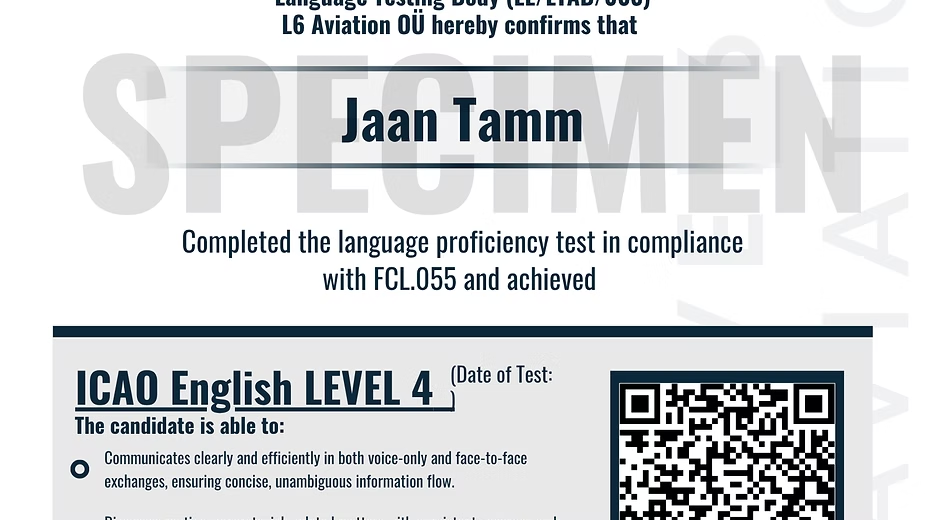
Understanding ICAO English Levels The International Civil Aviation Organization (ICAO) has established a rating scale ranging from Level 1 (Pre-elementary) to Level 6 (Expert) to assess English language proficiency among aviation professionals. Achieving Level 6 means you have expert command over the language, ensuring clear and effective communication in all aviation contexts. Why Aim for Level 6? While Level 4 (Operational) is the minimum requirement for international